Virtua Racing
From Sega Retro
| ||||||||||||||||||||||||||||||||||||||||||||||||||||||||||||||||||||||||
| Virtua Racing | ||||||||||||||||||||||||||||||||||||||||||||||||||||||||||||||||||||||||
|---|---|---|---|---|---|---|---|---|---|---|---|---|---|---|---|---|---|---|---|---|---|---|---|---|---|---|---|---|---|---|---|---|---|---|---|---|---|---|---|---|---|---|---|---|---|---|---|---|---|---|---|---|---|---|---|---|---|---|---|---|---|---|---|---|---|---|---|---|---|---|---|---|
| System(s): Sega Model 1, Sega Mega Drive | ||||||||||||||||||||||||||||||||||||||||||||||||||||||||||||||||||||||||
| Publisher: Sega | ||||||||||||||||||||||||||||||||||||||||||||||||||||||||||||||||||||||||
Developer:   | ||||||||||||||||||||||||||||||||||||||||||||||||||||||||||||||||||||||||
| Distributor: | ||||||||||||||||||||||||||||||||||||||||||||||||||||||||||||||||||||||||
| Sound driver: | ||||||||||||||||||||||||||||||||||||||||||||||||||||||||||||||||||||||||
Peripherals supported:  | ||||||||||||||||||||||||||||||||||||||||||||||||||||||||||||||||||||||||
| Genre: Racing[3][4], Sports[5] | ||||||||||||||||||||||||||||||||||||||||||||||||||||||||||||||||||||||||
| Number of players: 1-2, | ||||||||||||||||||||||||||||||||||||||||||||||||||||||||||||||||||||||||
|


Virtua Racing (バーチャレーシング) is an arcade racing game developed by Sega AM2 and published by Sega in 1992. Virtua Racing was the first game released for the Sega Model 1 arcade platform, and also the first to use the name "Virtua" in its title (something which would be followed by numerous Sega arcade games, including Virtua Fighter, Virtua Cop and Virtua Tennis. It was a milestone in 3D graphics and the racing genre, and acts as a foundation for most modern racing games. It was ported to the Mega Drive (with the Sega Virtua Processor chip on the cartridge), 32X, and Saturn.
Contents
Gameplay
Virtua Racing is a 3D racing game, where players drive formula one-esque cars around one of three tracks against 15 other vehicles (either computer or player controlled). Like earlier Sega games, it is time-limited, with checkpoints dotted around the track to extend play.
The game was Sega's first foray into 3D graphics, following over a decade's worth of pseudo-3D offerings (starting with Turbo) with 2D sprites scaling in real time. Almost everything in Virtua Racing is rendered with flat-shaded quadrilateral polygons, which means track designs are more complex than in prior Sega racers. The physics model, however, is not dissimilar to earlier games such as Power Drift - it is impossible to destroy your car, and the only penalty for driving off-road is a significant speed decrease.
Crashing into an obstacle or opponent at a high speed causes one of two animations to play out, both of which simply slow progress for a short period of time (that is to say, the angles and forces of impact have very little bearing on the result of a crash). Crashing will also force the vehicle to face forward, so while it is fully possible to turn 180 degrees and drive in the opposite direction (unlike many previous Sega outings), the game makes every attempt to stop you from doing so. The simplified collision also means it is impossible to run over your pit crew (although you can still drive through them).
In multiplayer modes, Virtua Racing implements a crude "rubber banding" system, in which cars behind the leader have better performance.[16] Every player drives an identical car, save for differences in colour scheme.
Virtua Racing features multiple camera angles which can be selected on the cabinet itself. It also has a seven speed manual mode, the "manual" car being faster than its "automatic" counterpart if driven correctly.
Unlike Sega arcade games both before and since, Virtua Racing is very light on music, with only one of a dozen jingles playing each time the player crosses a checkpoint. Unusually for the era, cabinets also support 16:9 widescreen displays - originally intended for the "deluxe" model, this gives the player a more expanded look of the playfield (although the internal resolution of the game remains the same).
Tracks
The original release of Virtua Racing has the player race around three different tracks divided into difficulty:
| Big Forest | |
|---|---|
| "Beginner" track. | |
| Bay Bridge | |
| "Medium" track. | |
| Acropolis | |
| "Expert" track |


History
Development
- Main article: Virtua Racing/Development.
Release
The game was a commercial success in the arcades. In North America, RePlay's coin-op charts in April 1993 listed Virtua Racing as the highest-earning deluxe video game arcade cabinet.[17] It remained the highest-earning deluxe cabinet in the May 1993 charts.[18]
The hardware was revolutionary at the time of release, but Virtua Racing was later outclassed by its successor, the Sega Model 2 board, which debuted towards the end of 1993. There are no textured polygons in Virtua Racing, as Model 1 did not support them in hardware. There is one vehicle, and when linked together it is offered in several colours, but the stats never vary. Crashing slows the car down, but there is no damage model. There are differing surface types, with anything not on-road slowing the car down, but it does not affect handling, which would be pioneered by Sega Rally Championship several years later.
There are a few music tracks: during races, and jingles of several seconds play as the user crosses checkpoints and the goal line for laps; this is likely stylistic.
Virtua Racing was succeeded by its logical successor, Daytona USA, which brought the genre further forward. It would also take home systems several years to "catch up" to Virtua Racing in terms of 3D resolution and polygon counts.
Versions
Virtua Racing was available to arcade operators as single or twin cabinets. Four of the twin units can be linked up to create an eight-player experience.
Virtua Formula
- Main article: Virtua Formula.
Special mid-size attractions, usually only seen at Amusement Theme Park locations and other large amusement facilities, used a modified version of Virtua Racing to create a higher-end hydraulic multiplayer experience, Virtua Formula.
Mega Drive version
- See Sega Virtua Processor for details on cartridge chip
Virtua Racing was an arcade success, and though expected to avoid home consoles for quite some time due to the complexity of the Model 1 arcade board, saw an initially surprising port to the Sega Mega Drive in 1994. The Mega Drive version utilizes a custom made Sega Virtua Processor (SVP) chip, allowing the game to render significantly more polygons than the Super FX chip within Star Fox for the Super NES, as the SVP is a great deal more powerful than the Super FX. The Mega Drive port is surprisingly accurate.
Though the Mega Drive Virtua Racing is one of the more technically advanced Mega Drive games in the library, the unusual specifications of the cart mean that it is often one of the first games to not be supported by cost-reduced hardware (for example, it won't work with the Genesis 3). The Mega Drive version also takes a hit in terms of graphics and sound, displaying fewer polygons at a smaller resolution with a restricted palette and lower frame rate (around 15FPS, as opposed to the arcade's 60FPS (but double that of the Super FX-powered StarFox and Stunt Race FX on the Super NES)). However, it and all of the other home ports include two-player modes, time trials and options usually only available to arcade operators.
32X version
- Main article: Virtua Racing Deluxe.
Mere months later, Virtua Racing was released as a launch title for the Sega 32X, in the form of Virtua Racing Deluxe. Deluxe adds two extra tracks and due to the increased power of the 32X, has a greater resemblance to the Model 1 release.
Saturn version
- Main article: Time Warner Interactive's VR Virtua Racing.
A Sega Saturn version of the game, officially titled Time Warner Interactive's VR Virtua Racing was brought to the console by Time Warner Interactive in 1995, sporting seven extra courses (on top of the three arcade tracks), four new cars and a grand prix mode among other additions.
Virtua Racing -FlatOut-
- Main article: Sega Ages 2500 Series Vol.8: Virtua Racing -FlatOut-.
More recently, the game has been released as Virtua Racing -FlatOut-, part of the Sega Ages 2500 series on the PlayStation 2. This version includes an extra three new courses and four new cars to the Model 1 version.
Mobile version
- Main article: Virtua Racing (mobile).
In 2008, a mobile version of the game was released through the Puyo Puyo! Sega service. This version takes after Virtua Racing Deluxe, featuring the same cars and tracks, in addition to four new cars.
Switch version
- Main article: Sega Ages Virtua Racing.
In 2019, a version was released for the Nintendo Switch as part of the console's Sega Ages series. This version was developed by M2 and runs at 60 frames per second in 1080p in docked mode or 720p in handheld mode.
Sega VR version
A version of the game was also planned for the Sega VR, a virtual reality headset accessory for the Mega Drive/Genesis that was planned to release in fall 1993. (Electronic Gaming Monthly, Video Game Preview Guide, 1993) However, the game, along with the accessory, was later cancelled.
Game Boy Advance version
A Game Boy Advance adaptation from Dream On Studio was prototyped and pitched in 2005. However, the project wasn't greenlit due to "the arrival of the Nintendo DS and changes in SEGA corporation".[19]
Production credits
- Main article: Virtua Racing/Production credits.
Digital manuals
- Error creating thumbnail: /bin/bash: line 1: /usr/bin/gs: Permission denied
convert: no decode delegate for this image format `' @ error/constitute.c/ReadImage/587. convert: no images defined `/home/sonicret/domains/segaretro.org/public_html/images/temp/transform_ee1b7f36686a.jpg' @ error/convert.c/ConvertImageCommand/3229.
Mega Drive Mini 2 US manual

Mega Drive Mini 2 EU manual
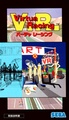
Mega Drive Mini 2 JP manual
Magazine articles
- Main article: Virtua Racing/Magazine articles.
Promotional material
- Main article: Virtua Racing/Promotional material.
Artwork


Photo gallery
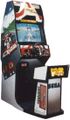
Upright cabinet
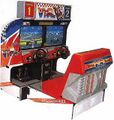
Twin cabinet
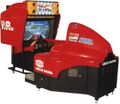
Deluxe cabinet


Physical scans
Model 1 version
| Sega Retro Average | |||||||||||||||||||
|---|---|---|---|---|---|---|---|---|---|---|---|---|---|---|---|---|---|---|---|
|
|
92 |
|---|---|
| Based on 3 reviews | |
| Model 1, US (upright) | ||||
|---|---|---|---|---|
| Model 1, US (twin) | ||||
|---|---|---|---|---|
| Model 1, US (deluxe) | ||||
|---|---|---|---|---|
| Model 1, JP (upright) | ||||
|---|---|---|---|---|
| Model 1, JP (twin) | ||||
|---|---|---|---|---|
| Model 1, JP (deluxe) | ||||
|---|---|---|---|---|
| Model 1, UK (twin) | ||||
|---|---|---|---|---|
 Manual | ||||
Mega Drive version
|
87 |
|---|---|
| Based on 48 reviews | |
| Mega Drive, JP |
|---|
 Cover
|
   Cart  Manual  PCB |
| Mega Drive, US |
|---|
 Cover
|
 Cart  Manual  PCB (heatsink) |
| Mega Drive, EU |
|---|
 Cover
|
  Cart  Manual  PCB  PCB (heatsink) |
| Mega Drive, PT |
|---|
 Cover
|
| Mega Drive, GR (Zegetron) |
|---|
|
Cart |
| Mega Drive, SE rental (SF) |
|---|
 Cover
|
| Mega Drive, SE rental (ALT) |
|---|
|
| Mega Drive, AU |
|---|
|
| Mega Drive, BR |
|---|
 Cover
|
 Cart  Manual |
| Mega Drive, KR |
|---|
 Cover
|
 Cart |
| Mega Drive, Asia |
|---|
 Cover
|
 Cart  Manual |
| Mega Drive, SG/MY/BN |
|---|
 Cover
|
Cart |
| Mega Drive, SG/MY/BN (alt) |
|---|
|
Cart |
Technical information
- Main article: Virtua Racing/Technical information.
References
- ↑ ', "" (; ), page 38
- ↑ RePlay, "Volume XVIII, No. 4: January 1993" (US; 199x-xx-xx), page 75
- ↑ File:Virtrac md jp cover.jpg
- ↑ 4.0 4.1 https://sega.jp/history/hard/megadrive/software.html (Wayback Machine: 2020-07-20 09:51)
- ↑ File:VirtuaRacing MD SE Box Rental.jpg
- ↑ Sega Arcade History, Enterbrain, page 125
- ↑ RePlay, "Volume XVIII, No. 4: January 1993" (US; 199x-xx-xx), page 125
- ↑ GamePro, "April 1994" (US; 1994-xx-xx), page 76
- ↑ 9.0 9.1 Game Players, "Vol. 7 No. 4 April 1994" (US; 1994-0x-xx), page 36
- ↑ GamePro, "April 1994" (US; 1994-xx-xx), page 160
- ↑ Computer Trade Weekly, "" (UK; 1994-05-23), page 6
- ↑ File:DailyExpress UK 1994-05-27 41.jpg
- ↑ Computer & Video Games, "December 1994" (UK; 1994-11-15), page 134
- ↑ 14.0 14.1 Sega Power, "May 1994" (UK; 1994-03-31), page 28
- ↑ SuperGamePower, "Maio 1994" (BR; 1994-0x-xx), page 11
- ↑ File:GameOn US 06.pdf, page 10
- ↑ Electronic Games (1992-1995), "June 1993" (US; 1993-05-11), page 14
- ↑ File:ElectronicGames2 US 10.pdf, page 14
- ↑ https://www.youtube.com/watch?v=KD5iGYMuAbQ
- ↑ Electronic Gaming Monthly, "November 1992" (US; 1992-xx-xx), page 54
- ↑ MegaTech, "December 1992" (UK; 1992-11-20), page 16
- ↑ Supergame, "Abril 1993" (BR; 1993-04-xx), page 32
- ↑ Sega Mega Drive Advanced Gaming, "June 1994" (UK; 1994-04-28)
- ↑ 1700 igr dlya Sega, "" (RU; 2001-xx-xx), page 259
- ↑ Beep! MegaDrive, "April 1994" (JP; 1994-03-08), page 19
- ↑ Consoles +, "Juin 1994" (FR; 1994-0x-xx), page 159
- ↑ Computer & Video Games, "May 1994" (UK; 1994-04-15), page 50
- ↑ Computer & Video Games, "July 1994" (UK; 1994-06-15), page 107
- ↑ Edge, "May 1994" (UK; 1994-03-31), page 82
- ↑ Electronic Games (1992-1995), "August 1994" (US; 1994-0x-xx), page 84
- ↑ Electronic Gaming Monthly, "June 1994" (US; 1994-xx-xx), page 33
- ↑ Famitsu, "1994-03-25" (JP; 1994-03-11), page 1
- ↑ FLUX, "Issue #1" (US; 1994-xx-xx), page 78
- ↑ GameFan, "Volume 2, Issue 7: June 1994" (US; 1994-xx-xx), page 26
- ↑ GamePro, "June 1994" (US; 1994-xx-xx), page 38
- ↑ Gamers, "März/April 1994" (DE; 1994-03-04), page 36
- ↑ Games World: The Magazine, "July 1994" (UK; 1994-05-26), page 17
- ↑ Hippon Super, "April 1994" (JP; 1994-03-03), page 61
- ↑ Hobby Consolas, "Junio 1994" (ES; 1994-xx-xx), page 60
- ↑ Hyper, "March 1994" (AU; 1994-xx-xx), page 22
- ↑ Joker, "September 1994" (SI; 1994-xx-xx), page 29
- ↑ Joypad, "Avril 1994" (FR; 1994-0x-xx), page 126
- ↑ Joypad, "Mai 1994" (FR; 1994-0x-xx), page 60
- ↑ MAN!AC, "05/94" (DE; 1994-04-13), page 36
- ↑ Mega, "April 1994" (UK; 1994-03-17), page 22
- ↑ Mega Force, "Avril 1994" (FR; 1994-0x-xx), page 8
- ↑ Mega Force, "Mai 1994" (FR; 1994-0x-xx), page 96
- ↑ Mega Fun, "04/94" (DE; 1994-03-23), page 44
- ↑ Mega Power, "May 1994" (UK; 1994-04-21), page 42
- ↑ MegaTech, "May 1994" (UK; 1994-04-21), page 4
- ↑ Magazina Igrushek, "5/1995" (RU; 1995-xx-xx), page 78
- ↑ Mean Machines Sega, "May 1994" (UK; 1994-03-xx), page 49
- ↑ Player One, "Mai 1994" (FR; 1994-0x-xx), page 51
- ↑ Play Time, "5/94" (DE; 1994-04-06), page 142
- ↑ Power Up!, "Saturday, May 21, 1994" (UK; 1994-05-21), page 1
- ↑ Power Unlimited, "Jaargang 2, Nummer 5, Mei 1994" (NL; 1994-04-27), page 28
- ↑ Score, "Říjen 1994" (CZ; 1994-10-01), page 53
- ↑ Sega Magazine, "August 1994" (UK; 1994-07-15), page 97
- ↑ Sega Pro, "May 1994" (UK; 1994-04-21), page 44
- ↑ Sega Zone, "May 1994" (UK; 1994-04-xx), page 54
- ↑ Sega Force, "3/94" (SE; 1994-03-29), page 18
- ↑ SuperGamePower, "Maio 1994" (BR; 1994-0x-xx), page 34
- ↑ The Official Sonic the Hedgehog Yearbook (1994), "" (UK; 1994-xx-xx), page 35
- ↑ Sega Saturn Magazine, "September 1995" (JP; 1995-08-08), page 85
- ↑ Supergames, "Ano I, Numero I" (AR; 1994-xx-xx), page 6
- ↑ Todo Sega, "Junio 1994" (ES; 1994-0x-xx), page 32
- ↑ Tricks 16 bit, "Tricks Sega Gold 800 igr" (RU; 1998-03-20), page 219
- ↑ Video Games, "5/94" (DE; 1994-04-27), page 91
- ↑ VideoGames, "August 1994" (US; 1994-0x-xx), page 86
| Virtua Racing | |
|---|---|
|
Main page | Comparisons | Credits | Hidden content | Development | Magazine articles | Video coverage | Reception | Promotional material | Region coding | Technical information
Music: Virtua Racing & OutRunners (1993) | Yu Suzuki Produce G-LOC/R360/Virtua Racing (1998) Videos: Virtua Racing: Virtua Video (199x) | |


| Virtua Racing series of games | |
|---|---|
|
Virtua Racing (1992) | Virtua Formula (1993) |
|
Virtua Racing (1994) |
 |
Virtua Racing Deluxe (1994) |
|
Time Warner Interactive's VR Virtua Racing (1995) |
 |
Sega Ages 2500 Series Vol. 8: Virtua Racing FlatOut (2004) |
 |
Sega Ages Virtua Racing (2019) |
| Virtua Racing related media | |
 |
Virtua Racing & OutRunners (1993) | Yu Suzuki Produce G-LOC/R360/Virtua Racing (1998) |
 |
Virtua Racing Hisshou Kouryaku Hou (1994) | Virtua Racing: Official Racing Guide (1994) |
 |
Virtua Racing: Virtua Video (?) |
- Six Button Control Pad-compatible games
- Saturn Backup Memory-compatible games
- 1-8 player games
- 1-2 player games
- All arcade games
- Model 1 games
- 1992 Model 1 games
- All 1992 games
- JP Mega Drive games
- US Mega Drive games
- EU Mega Drive games
- PT Mega Drive games
- UK Mega Drive games
- SE Mega Drive games
- GR Mega Drive games
- AU Mega Drive games
- BR Mega Drive games
- KR Mega Drive games
- AS Mega Drive games
- Mega Drive games
- 1994 Mega Drive games
- All 1994 games
- Mega Drive racing games
- Mega Drive sports games
- All games
- Old-style rating (gamesmaster)
- Rating without PDF source
- Old-style rating (mdag)
- Update ratings template
- 2 old ratings
- Virtua Racing
- Virtua Racing (franchise)
- Mega Drive Mini 2 games