Daytona USA
From Sega Retro
- For the Sega Dreamcast game known in North America as Daytona USA, see Daytona USA 2001.
- For the 2011 remake, see Daytona USA (2011).
| ||||||||||||||||||||||||||||||||||||||||||||||||||||||||||||||||||||||||||||||||||||||||||||||||||||||||||||||||||||||||||
| Daytona USA | ||||||||||||||||||||||||||||||||||||||||||||||||||||||||||||||||||||||||||||||||||||||||||||||||||||||||||||||||||||||||||
|---|---|---|---|---|---|---|---|---|---|---|---|---|---|---|---|---|---|---|---|---|---|---|---|---|---|---|---|---|---|---|---|---|---|---|---|---|---|---|---|---|---|---|---|---|---|---|---|---|---|---|---|---|---|---|---|---|---|---|---|---|---|---|---|---|---|---|---|---|---|---|---|---|---|---|---|---|---|---|---|---|---|---|---|---|---|---|---|---|---|---|---|---|---|---|---|---|---|---|---|---|---|---|---|---|---|---|---|---|---|---|---|---|---|---|---|---|---|---|---|---|---|---|
| System(s): Sega Model 2, Sega Saturn, Windows PC | ||||||||||||||||||||||||||||||||||||||||||||||||||||||||||||||||||||||||||||||||||||||||||||||||||||||||||||||||||||||||||
| Publisher: Sega, Samsung (KR) | ||||||||||||||||||||||||||||||||||||||||||||||||||||||||||||||||||||||||||||||||||||||||||||||||||||||||||||||||||||||||||
Developer:   | ||||||||||||||||||||||||||||||||||||||||||||||||||||||||||||||||||||||||||||||||||||||||||||||||||||||||||||||||||||||||||
| Distributor: | ||||||||||||||||||||||||||||||||||||||||||||||||||||||||||||||||||||||||||||||||||||||||||||||||||||||||||||||||||||||||||
| Licensor: International Speedway Corporation | ||||||||||||||||||||||||||||||||||||||||||||||||||||||||||||||||||||||||||||||||||||||||||||||||||||||||||||||||||||||||||
Sound driver:  | ||||||||||||||||||||||||||||||||||||||||||||||||||||||||||||||||||||||||||||||||||||||||||||||||||||||||||||||||||||||||||
| Peripherals supported: | ||||||||||||||||||||||||||||||||||||||||||||||||||||||||||||||||||||||||||||||||||||||||||||||||||||||||||||||||||||||||||
| Genre: Driving[1], Racing[2] | ||||||||||||||||||||||||||||||||||||||||||||||||||||||||||||||||||||||||||||||||||||||||||||||||||||||||||||||||||||||||||
| Number of players: | ||||||||||||||||||||||||||||||||||||||||||||||||||||||||||||||||||||||||||||||||||||||||||||||||||||||||||||||||||||||||||
|


.svg)


Daytona USA (DAYTONA USA) is a Sega Model 2 arcade racing game developed by Sega AM2. It was initially given a limited release in Japan in 1993 to gauge public reaction to the new model hardware before its full, international release the following March.
It is loosely based on the NASCAR racing event at the Daytona International Speedway, located in real life in Daytona Beach, Florida in the United States of America. Daytona USA and all of its sequels and rereleases (except Sega Racing Classic, in which case someone else already held the arcade license) have been officially sponsored by the International Speedway Corporation.
Contents
Gameplay
The original arcade release has the player drive a stock car, known as the "Hornet" (number 41, producer Toshihiro Nagoshi's "lucky number") loosely based on a Chevrolet Beretta, racing against numerous other cars around three selectable tracks. Player one's car by default is coloured red and blue (the manual car uses a red, black and yellow colour scheme), and can be seen at the forefront of all game covers, flyers and similar media related to the series with the exception of Daytona USA 2 and its update, Daytona USA 2: Power Edition.
The game features both automatic and manual transmissions, the latter requiring use of the gear stick and which, if used properly, can lead to a faster car than the automatic. Crashing into walls or other cars can inflict damage leading to poor performance - to remedy this each level has a pit lane, which, by sacrificing some time, can fix the car.
Daytona USA has smarter AI than many other driving games from around this period. The computer analyses the player's skill during the first lap, and will instruct rival cars to move out of the way if it feels the player is doing poorly (while doing the opposite if the player registers a fast time). Most notably, however, is Daytona USA's multiplayer features. It was the first arcade game ever to allow up to eight cabinets to be linked together, with each player capable of competing in the same race. Each player assumes the role of a different coloured Hornet, and each cabinet must be ready to race and agreed on a course before this can happen (otherwise the game may start up with less than eight players).
The game also has Team Hornet inform the player of turns and traffic, and will comment on your driving if you crash. Most of the rival teams in the game are not named, however several adopt the logos or colour schemes of Japanese car magazines, which in return wrote articles about Daytona USA[20].
Tracks
Note: In the original Model 2 version of the game, tracks were not given names. It was only subsequent ports (and the official Daytona USA soundtrack) which named them.
| Three-Seven Speedway (Beginner) | |
|---|---|
| The beginner track, Three-Seven Speedway (or 777 Speedway), is the simplest and most iconic track of the series, built similarly to real NASCAR tracks and is loosely based on the Pocono Speedway in Pennsylvania. It is essentially a circle, which by default has the user race 8 laps against 39 other cars. Notable features include a cliff face with Sonic the Hedgehog ingraved into the side. It is the only track in the game to offer a "rolling start". | |
| Dinosaur Canyon (Advanced) | |
| The advanced track, Dinosaur Canyon is as expected, more challenging in nature. The number of laps required has dropped to 4, and the number of cars to 20. Both the advanced and expert tracks are designed like more traditional racing games and are not based on NASCAR tracks. They also typically require the player to make heavy use of drifting in order to get around tight corners.
The music played on this track is "Let's Go Away", of which a shortened version is used as part of the attract mode. | |
| Sea-Side Street Galaxy (Expert) | |
| The expert track, Sea-Side Street Galaxy reduces the number of laps to 2 but raises the amount of oppoents to 30. As expected it is the hardest course in game and is the only track to contain mulitple paths (aside from the pit lane).
The music played here is "Sky High", also known as "Blue, Blue Skies". There is a statue of Jeffry McWild from Virtua Fighter. |


History
Development
The idea of Daytona USA was conceived during one of Toshihiro Nagoshi's visits to North America, where he went to watch a NASCAR race. At the time, his team were looking for new ways to expand and develop the racing genre, and the simplistic-yet-exciting nature of NASCAR prompted the team to try and emulate this in video game form.
The soundtrack was composed and performed by Takenobu Mitsuyoshi, however in the Model 2 version he does not sing entire songs at once. Instead parts of his vocals were recorded and played at various pitches and lengths in order to construct songs, hence their arguably simplistic nature. This is because Model 2 hardware has comparatively limited sound capabilities compared to systems which rely on CD audio.
Daytona USA's original arcade release was notable for a number of reasons. At the time, it was considered perhaps the most detailed 3D racing game ever created. Unlike Sega's previous creation Virtua Racing (released in 1992), the 3D world was fully texture-mapped, giving the impression of a more realistic world. It was also the first game to use texture filtering, allowing smoother graphics. Coupled with the graphical advances, Daytona USA is able to keep a constant full 60 FPS refresh rate, even with multiple on-screen opponents.
The 1994 worldwide arcade release has slightly better AI than the 1993 Japanese original, but is otherwise identical. Other arcade revisions of the game involve advertisements for the Sega Saturn. The deluxe cabinet version features a large 50-inch display.[21]
During development the game was originally known simply as Daytona, and then briefly as Daytona GP.
A port was planned for the Sega 32X, announced in early 1994[6], but ultimately failed to materialise.
When developing Sega Rally Championship, Sega AM3 suggested that Daytona USA was only using "50%" of the Model 2's capabilities[22].
Location testing
| Venue | Start date | End date | Comments |
|---|---|---|---|
| Ikebukuro GiGO, 1st Floor[23] | 1993-12[23] | 1993-12[23] |
The game reached the amount of money needed to pass its location test on Saturday, December 25, very near closing time.[23]
Legacy
Due to its popularity, Daytona USA was released as a Western launch title for the Sega Saturn in 1995. This version, like the Sega Saturn itself, was rushed for a quick release and was widely criticised for its lower framerate (~20FPS) and numerous graphical concerns. This lead to Sega releasing an update; Daytona USA: Championship Circuit Edition. Like Sega Rally, this version was tuned up and offered a more stable framerate with more tracks and features.
Championship Circuit Edition would mark the first in a long line of sequels, which, with the exception of Daytona USA 2, simply took the formula of the original arcade game and "upgraded" it, rather than offering a brand new experience. Sega Racing Classic, released fifteen years after Daytona USA is even worse in this regard, as it is almost identical in nature bar some increased screen resolutions and missing Daytona branding (as another arcade company already acquired the arcade license at the time).
Versions
Saturn version
Daytona USA was the second of two "big" games announced early in the development of the Sega Saturn console (the other being Virtua Fighter) and became one of the first first-party games to arrive on the platform. While ultimately Panzer Dragoon became the first Saturn released game to push texture-mapped polygons, Daytona USA was given much more coverage in the press due to its performance in the arcade scene.
However, views on the end product were mixed, with the Saturn version receiving severe cutbacks to both run relatively smoothly on the platform and meet its release date. Most notably, the game runs at only a third of the frame rate of the arcade, averaging roughly 20 frames per second. Polygon counts were lowered across the board, as was the screen resolution and texture detail, though some of this is made up with a higher quality CD audio soundtrack (Takenobu Mitsuyoshi re-recorded each song from beginning to end rather than splice clips around like in the Model 2 version). Also offered are new gameplay modes and options, such as a two-player split-screen feature.
On the Saturn, Daytona USA's draw distance is significantly shorter, meaning only scenery close to the Hornet is rendered at any given point. While not uncommon for games of the era, Daytona USA makes no attempt to hide the flaws, leading to obvious clipping and pop-in issues as geometry suddenly appears on screen (later Saturn games would use "fogging", which gives the impression that the world "fades out" when it reaches the end of the draw distance, or simply made arrangements so that the draw distance was longer). The camera is considerably more jerky in some sections of the game.
This was not seen as a good thing for the Saturn, as the PlayStation's port of Namco's Ridge Racer, released at a similar time, was neither rushed nor struggled to mask graphical concerns (it is also widely considered that the arcade version of Daytona USA is more technically advanced than the arcade version of Ridge Racer). These sorts of issues in early Saturn games gave users the impression the PlayStation was much better equipped to handle 3D worlds, which, in the west at least, was seen as the way forward for video games.
The Saturn version does include some enhancements however, such as the option to play as the other cars seen in the arcade version. It is compatible with the Arcade Racer and surprisingly, the 3D Control Pad (released a full year after Daytona USA). The game interprets the 3D Control Pad as an Arcade Racer when it is set to "analog".
PC version
The Saturn version of Daytona USA was ported to Windows PCs in 1996, and offers only limited improvements over its console counterpart. By default the game does not use "true" hardware acceleration (using the Windows DirectDraw API - a 2D rendering system not always tailored for the many competing 3D accelerator cards on the market at the time), rendering an image similar to that of the Saturn (complete with "checkerboard" semi-transparency).
By default the game targets a 640x480 resolution, however assets are unchanged from the Saturn version, and so are crudely resized in software. 3D elements are rendered at the native resolution, although computers of the day would struggle to maintain a consistent frame rate at these settings. As compensation, a lower resolution option exists, but with different elements resizing in different ways, the picture is noticeably more distorted than its Saturn counterpart.
Options exist to turn some of the background scenery into wireframes, but one can also go in the other direction, extending the draw distance beyond the default Saturn distance.
In Japan (and possibly elsewhere), two versions of the PC port were released due to the changing nature of the PC market of the time. The first "Requires Expansion Board" version (HCJ-0110) is optimised to take advantage of the Diamond Edge 3D and Leadtek WinFast 3D GD400 video cards, while the second (HCJ-0121) utillises Microsoft's DirectX technology (and requires Windows 95). Content wise the two versions are identical.
Xbox Live Arcade/PlayStation Network
- Main article: Daytona USA (2011).
In 2011 Daytona USA was released for Xbox Live Arcade and PlayStation Network, sporting high definition visuals and online multiplayer. It is otherwise identical to the original Model 2 version, containing similar low-polygon graphics (with improved draw distances) and music (a remixed set from Sega Racing Classic is also available, with vocals by Takenobu Mitsuyoshi).
Comparisons
- Main article: Daytona USA/Comparisons.
Localised names
| Language | Localised Name | English Translation |
|---|---|---|
| English | Daytona USA | Daytona USA |
| English (US) | Daytona USA | Daytona USA |
| Japanese | デイトナUSA | Daytona USA |
| Korean | 데이토나USA | Daytona USA |
Production credits
- Main article: Daytona USA/Production credits.
Digital manuals

US manual (deluxe)
US manual (LE)
US manual (twin)
US service bulletin 1
US service bulletin 3

US service bulletin 4

US service bulletin 5
US service bulletin 6

US service bulletin 7
Magazine articles
- Main article: Daytona USA/Magazine articles.
Promotional material
- Main article: Daytona USA/Promotional material.
Artwork


Photo gallery
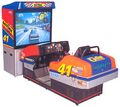
Deluxe cabinet
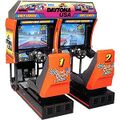
Twin cabinet
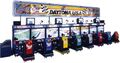
8-player cabinet
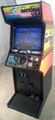
Upright cabinet


Physical scans
Model 2 version
| Sega Retro Average | ||||||||||||||
|---|---|---|---|---|---|---|---|---|---|---|---|---|---|---|
|
|
95 |
|---|---|
| Based on 2 reviews | |
| Model 2, US (deluxe) | ||||
|---|---|---|---|---|
| Model 2, US (twin) | ||||
|---|---|---|---|---|
| Model 2, US (upright) | ||||
|---|---|---|---|---|
 Manual | ||||
| Model 2, JP (deluxe) | ||||
|---|---|---|---|---|
| Model 2, JP (twin) | ||||
|---|---|---|---|---|
| Model 2, UK (deluxe) | ||||
|---|---|---|---|---|
| Model 2, UK (twin) | ||||
|---|---|---|---|---|
 Manual | ||||
| Model 2, | ||||
|---|---|---|---|---|
 Manual | ||||
Saturn version
|
85 |
|---|---|
| Based on 54 reviews | |
| Saturn, JP |
|---|
  Cover
|
 Spinecard  Disc  Manual |
| Saturn, US |
|---|
  Cover
|
 Disc  Manual |
| Saturn, US (Not For Resale) |
|---|
   Cover
|
 Disc |
| Saturn, EU |
|---|
 Cover
|
 Disc  Manual |
| Saturn, DE |
|---|
 Cover
|
Disc |
| Saturn, PT |
|---|
 Cover
|
Disc |
| Saturn, AU |
|---|
 Cover
|
Disc |
| Saturn, BR |
|---|
   Cover
|
| Saturn, KR |
|---|
   Cover
|
PC version
| Sega Retro Average | ||||||||||||||||||||||||||||||||||||||||||||||||||||||
|---|---|---|---|---|---|---|---|---|---|---|---|---|---|---|---|---|---|---|---|---|---|---|---|---|---|---|---|---|---|---|---|---|---|---|---|---|---|---|---|---|---|---|---|---|---|---|---|---|---|---|---|---|---|---|
|
|
75 |
|---|---|
| Based on 10 reviews | |
| PC, JP |
|---|
   Cover
|
| PC, JP (You Kakuchou Board-ban) |
|---|
  Cover
|
| PC, JP (Ultra 2000 Series) |
|---|
 Cover
|
| PC, US |
|---|
 Cover
|
| PC, US (Expert Software) |
|---|
  Cover
|
 Disc   Jewel Case |
| PC, EU |
|---|
|
 Disc   Jewel Case |
| PC, BR (Tec Toy) |
|---|
  Cover
|
 Disc   Jewel Case |
| PC, TW |
|---|
|
| PC, CN |
|---|
    Cover
|
 Disc |
Technical information
- Main article: Daytona USA/Technical information.
Specifications
Dimensions
| Deluxe | Twin | Upright |
|---|---|---|
|
|
|
632.46 mm (24.9") 1.811 m (71.3") 939.8 mm (37")
|
| Mass: 375 kg (825 lbs) | Mass: 544 kg (1,200 lbs) | Mass: 136 kg (300 lbs) |
External links
References
- ↑ File:Daytonausa sat jp backcover.jpg
- ↑ 2.0 2.1 https://sega.jp/history/hard/segasaturn/software.html (Wayback Machine: 2020-03-04 08:13)
- ↑ 3.0 3.1 Mean Machines Sega, "August 1994" (UK; 1994-06-30), page 93
- ↑ 4.0 4.1 File:DaytonaUSA Model2 Flyer.pdf, page 2
- ↑ Sega Arcade History, Enterbrain, page 130
- ↑ 6.0 6.1 Computer & Video Games, "May 1994" (UK; 1994-04-15), page 32
- ↑ Press release: 1995-05-19: Sega Saturn launch takes consumers and retailers by storm
- ↑ 8.0 8.1 GamePro, "August 1995" (US; 1995-xx-xx), page 52
- ↑ 9.0 9.1 Sega Saturn Magazine, "November 1995" (UK; 1995-10-26), page 95
- ↑ 10.0 10.1 Games World: The Magazine, "September 1995" (UK; 1995-0x-xx), page 69
- ↑ 11.0 11.1 http://sega.jp/pc/daytona/ (Wayback Machine: 2001-11-02 16:58)
- ↑ http://sega.jp/pc/daytonab/ (Wayback Machine: 2004-04-06 23:11)
- ↑ File:DaytonaUSA PC JP Box Back Alt.jpg
- ↑ 14.0 14.1 http://www.media-kite.co.jp/product/page16.html (Wayback Machine: 2000-10-06 19:12)
- ↑ Ultra Game Players, "October 1996" (US; 1996-09-03), page 75
- ↑ 16.0 16.1 Press release: 1997-06-20: Sega chooses Expert Software for PC distribution agreement
- ↑ Computer Trade Weekly, "" (UK; 1996-11-25), page 36
- ↑ Computer Trade Weekly, "" (UK; 1996-11-25), page 36
- ↑ 19.0 19.1 PC Action, "12/96" (DE; 1996-11-20), page 129
- ↑ Computer & Video Games, "July 1996" (UK; 1996-06-12), page 83
- ↑ Electronic Gaming Monthly, "June 1994" (US; 1994-xx-xx), page 68
- ↑ Computer & Video Games, "January 1996" (UK; 1995-12-10), page 20
- ↑ 23.0 23.1 23.2 23.3 File:LGATVGDUSAAB_CD_JP_booklet.pdf, page 10
- ↑ Computer & Video Games, "September 1994" (UK; 1994-08-15), page 66
- ↑ Games World: The Magazine, "July 1994" (UK; 1994-05-26), page 25
- ↑ Alaab Alcomputtar, "" (SA; 1995-08-xx), page 74
- ↑ CD Consoles, "Mai 1995" (FR; 1995-xx-xx), page 102
- ↑ Consoles +, "Mai 1995" (FR; 1995-0x-xx), page 134
- ↑ Computer & Video Games, "June 1995" (UK; 1995-05-xx), page 15
- ↑ Computer & Video Games, "August 1995" (UK; 1995-07-12), page 32
- ↑ Digitiser (UK) (1995-07-12)
- ↑ Edge, "June 1995" (UK; 1995-04-27), page 72
- ↑ Electronic Entertainment, "August 1995" (US; 1995-0x-xx), page 76
- ↑ Electronic Gaming Monthly, "July 1995" (US; 1995-0x-xx), page 114
- ↑ Famitsu, "1995-04-07" (JP; 1995-03-24), page 1
- ↑ GameFan, "Volume 3, Issue 7: July 1995" (US; 1995-xx-xx), page 13
- ↑ Game Players, "Vol. 8 No. 8 August 1995" (US; 1995-0x-xx), page 40
- ↑ Games World: The Magazine, "June 1995" (UK; 1995-0x-xx), page 78
- ↑ HiTech, "Mayo 1995" (ES; 1995-0x-xx), page 50
- ↑ Level, "5/97" (TR; 1997-xx-xx), page 1
- ↑ MAN!AC, "06/95" (DE; 1995-05-10), page 44
- ↑ MAN!AC, "08/95" (DE; 1995-07-12), page 45
- ↑ Maximum, "October 1995" (UK; 1995-09-01), page 146
- ↑ Mega, "May 1995" (UK; 1995-04-30), page 4
- ↑ Mega Force, "Mai 1995" (FR; 1995-0x-xx), page 30
- ↑ Mega Fun, "08/95" (DE; 1995-07-19), page 80
- ↑ Magazina Igrushek, "2/1995" (RU; 1995-xx-xx), page 88
- ↑ Mean Machines Sega, "June 1995" (UK; 1995-04-28), page 58
- ↑ Mean Machines Sega, "September 1995" (UK; 1995-07-27), page 88
- ↑ Next Generation, "July 1995" (US; 1995-06-20), page 68
- ↑ Player One, "Juillet/Août 1995" (FR; 1995-0x-xx), page 60
- ↑ Players, "Dez 95" (BR; 1995-1x-xx), page 18
- ↑ Power Unlimited, "Jaagang 3, Jul/Aug 1995" (NL; 1995-06-28), page 42
- ↑ Saturn Fan, "1995 June" (JP; 1995-05-08), page 38
- ↑ Saturn+, "Christmas 1995" (UK; 1995-12-14), page 57
- ↑ Secret Service, "Maj 1996" (PL; 1996-05-01), page 67
- ↑ Sega Magazin, "August 1995" (DE; 1995-07-12), page 60
- ↑ Sega Magazine, "August 1995" (UK; 1995-07-13), page 58
- ↑ Sega News, "Říjen 1996" (CZ; 1996-xx-xx), page 13
- ↑ Sega Power, "June 1995" (UK; 1995-04-20), page 42
- ↑ Sega Pro, "May 1995" (UK; 1995-04-13), page 40
- ↑ Sega Pro, "September 1995" (UK; 1995-08-10), page 51
- ↑ Świat Gier Komputerowych, "9/1996" (PL; 1996-xx-xx), page 1
- ↑ Sega Megazone, "August 1995" (AU; 1995-0x-xx), page 20
- ↑ Sega Saturn Magazine, "April 1995" (JP; 1995-03-08), page 106
- ↑ Sega Saturn Magazine, "Readers rating final data" (JP; 2000-03), page 12
- ↑ Strana Igr, "" (RU; 1996-xx-xx), page 97
- ↑ Super Juegos, "Agosto 1995" (ES; 1995-0x-xx), page 50
- ↑ Todo Sega, "Agosto 1995" (ES; 1995-0x-xx), page 36
- ↑ Top Consoles, "Mai 1995" (FR; 1995-0x-xx), page 78
- ↑ Total Saturn, "Volume One Issue Four" (UK; 1996-12-29), page 21
- ↑ Ultimate Future Games, "June 1995" (UK; 1995-05-01), page 68
- ↑ Ultimate Future Games, "September 1995" (UK; 1995-08-01), page 91
- ↑ Última Generación, "Mayo 1995" (ES; 1995-0x-xx), page 66
- ↑ Video Games, "8/95" (DE; 1995-07-26), page 66
- ↑ Video Games, "8/95" (DE; 1995-07-26), page 64
- ↑ VideoGames, "June 1995" (US; 1995-0x-xx), page 75
- ↑ PC Games, "12/96" (DE; 1996-11-06), page 94-95 (92)
- ↑ 576 KByte, "Február 1997" (HU; 1997-xx-xx), page 12
- ↑ Digitiser (UK) (1996-11-20)
- ↑ The Games Machine, "Gennaio 1997" (IT; 199x-xx-xx), page 62
- ↑ Hacker, "12/1996" (HR; 1996-xx-xx), page 17
- ↑ Intelligent Gamer, "November 1996" (US; 1996-1x-xx), page 108
- ↑ PC Gamer Po Polsku, "Styczeń 1997" (PL; 1997-xx-xx), page 68
- ↑ PC Team, "Février 1997" (FR; 1997-xx-xx), page 58
- ↑ Power Play, "11/96" (DE; 1996-10-09), page 144
- ↑ Secret Service, "Styczeń 1997" (PL; 1997-01-01), page 32
- ↑ File:DaytonaUSA_Model2_US_DigitalManual_Deluxe.pdf
- ↑ File:DaytonaUSA_Model2_US_DigitalManual_Twin.pdf
| Daytona USA | |
|---|---|
|
Main page | Comparisons | Achievements | Credits | Hidden content | Bugs | Development | Magazine articles | Video coverage | Reception | Promotional material | Technical information | Bootlegs
Music: Daytona USA (1994) Videos: Daytona USA CGMV (1994) | |
| Daytona USA series of games | |
|---|---|
|
Daytona USA (1994) | Daytona USA 2: Battle on the Edge (1998) | Daytona USA 2: Power Edition (1998) | Sega Racing Classic (2009) | Daytona Championship USA (2017) |
|
Daytona USA (1995) | Daytona USA: Championship Circuit Edition (1996) | Daytona USA Circuit Edition (1997) | Daytona USA: CCE Netlink Edition (1998) |
 |
Daytona USA 2001 (2001) |
 |
Daytona USA (199x) | Daytona USA (199x) |
|
Daytona USA (1996) | Daytona USA Deluxe (1997) | Daytona USA Deluxe Special Edition (199x) |
  |
Daytona USA (2011) |
| Daytona USA related media | |
 |
Daytona USA (1994) | Daytona USA Circuit Edition Original Sound Track (1997) | Daytona USA 2 Sound Tracks (1998) | Let's Go Away: The Video Game Daytona USA Anniversary Box (2009) |
 |
Daytona USA Koushiki Guide Book (1994) | Sega Saturn Hisshou Hou Special: Daytona USA Kanzen Guide Book (1995) | Daytona USA Official Guide Book (1995) | Daytona USA Circuit Edition Hisshou Kouryaku Hou (1997) | Sega Saturn Hisshou Hou Special: Daytona USA Circuit Edition (1997) | Daytona USA 2 Official Guide (1998) |
 |
Daytona USA CGMV (1994) |
- Arcade Racer-compatible games
- Saturn Backup Memory-compatible games
- 1-8 player games
- All arcade games
- Model 2 games
- 1994 Model 2 games
- All 1994 games
- JP Saturn games
- US Saturn games
- EU Saturn games
- DE Saturn games
- PT Saturn games
- UK Saturn games
- PL Saturn games
- AU Saturn games
- BR Saturn games
- KR Saturn games
- Saturn games
- 1995 Saturn games
- All 1995 games
- Saturn racing games
- JP Windows PC games
- US Windows PC games
- EU Windows PC games
- UK Windows PC games
- PL Windows PC games
- BR Windows PC games
- CN Windows PC games
- TW Windows PC games
- PC games
- 1996 PC games
- All 1996 games
- PC racing games
- Windows PC games
- All games
- Old-style rating (famitsu r)
- Rating without PDF source
- Old-style rating (gamesmaster)
- Old-style rating (gi)
- External rating reference
- Old-style rating (hobbyconsolas)
- Rating without source
- Old-style rating (ssm)
- Update ratings template
- 5 old ratings
- Old-style rating (maniac)
- Old-style rating (pcgames)
- 2 old ratings
- Daytona USA
- Daytona USA (franchise)
- Unreleased 32X games