Sega NAOMI
From Sega Retro

| |||||||||||||||||

| |||||||||||||||||
| Sega NAOMI | |||||||||||||||||
|---|---|---|---|---|---|---|---|---|---|---|---|---|---|---|---|---|---|
| Manufacturer: Sega | |||||||||||||||||
| Variants: Sega NAOMI GD-ROM, Sega NAOMI Multiboard, Sega Dreamcast, Atomiswave, Sega System SP | |||||||||||||||||
| Add-ons: GD-ROM | |||||||||||||||||
|

The NAOMI (New Arcade Operation Machine Idea) is an arcade system released by Sega in 1998. It was designed as a successor to Sega Model 3 hardware, using a similar architecture to the Sega Dreamcast.
The NAOMI was succeeded by the Sega Hikaru and Sega NAOMI 2 boards, though having out-lasted the NAOMI 2, Hikaru and Sega System SP. The Sega Chihiro, or possibly even the Sega Lindbergh, could also be seen as successors.
Contents
Hardware
The NAOMI shares the same basic system architecture as the Dreamcast, with both systems using the same Hitachi SH-4 CPU and Yamaha AICA based sound system, along with different revisions of the PowerVR Series 2 GPU architecture. While the CPU of the NAOMI and Dreamcast operate at the same clock frequency, the NAOMI packs twice as much system and graphics memory, four times as much sound memory, a faster PowerVR2 graphics processor, faster VRAM bandwidth,[n 1] and FPGA with additional processing. Multiple NAOMI boards can also be 'stacked' together to achieve better graphics performance, or for a multi-monitor setup.
After The House of the Dead 2, a newer revision of the PowerVR2 graphics chip was used in subsequent NAOMI systems.[3] According to VideoLogic's president and CEO, Hossein Yassaie, in September 1998: "With Dreamcast, PowerVR set out to create a new standard in 3D graphics for console gaming; now with Sega’s Naomi, we will deliver unprecedented levels of 3D performance to arcade systems".[5]
Another key difference between NAOMI and Dreamcast lies in the game-media - the NAOMI primarily uses ROM PC (printed circuit) boards (i.e. large game cartridges) with up to 168 MB of usable data (more expensive but with faster loading), while the Dreamcast uses GD-ROM optical-storage with up to 1GB of storage (at the expense of load times). The NAOMI was extended in November 2000 so that it could interface with GD-ROM-based arcade games[1]. This system uses standard PC SDR-DIMM modules which are battery backed-up for storing game data. The game data is read from the GD-ROM at bootup, stored onto the SDR RAM to which the NAOMI reads from during game. This leaves less wear on the GD-ROM drive as it's only used when the memory is empty or corrupted, else it will use the SDR RAM for boot-up every subsequent power on after checking the data integrity. If the battery fails, the system is left turned off for several days or the game GD-ROM is changed, the game will be reloaded from the GD-ROM drive.
Along with the standard version, three more variants also exist:
- First Edition — The initial release of NAOMI hardware was housed in an aluminium shell, similar in design to some versions of the earlier Model 2 and Model 3 system hardware. This version is known to be used in House of the Dead 2 arcade machines, with the game ROM board pre-installed inside the case. It is unknown whether this is a unique hardware variant specifically for House of the Dead 2, or whether it is compatible with later NAOMI releases. This prototype uses an earlier revision of the PowerVR2 graphics processor.[3]
- Multiboard — Several NAOMI motherboards joined onto a single board which connects the multiple boards together to created a more powerful parallel processing system.
- Satellite Terminal — independent NAOMI cabinets connected to a master one, used first by Derby Owners Club.
NAOMI boards can be used in special game cabinets (NAOMI Universal Cabinet) where a theoretical maximum of sixteen boards can be used in a parallel processing format.
The NAOMI multiboard setup uses a different BIOS chip than a regular NAOMI to handle all the boards but the whole system only uses one copy of the game cartridge, of which only four games were released.
Technical Specifications
NAOMI Specifications
See Sega Dreamcast technical specifications for more details on the capabilities of the general Dreamcast/Naomi hardware architecture, though the specifications for the Naomi differ from the Dreamcast in various ways, as listed below.[3]
- Board composition: Motherboard, Internal ROM Board, Filter Board
- 1999 revision: Motherboard, Internal ROM Board, Filter Board, I/O Board
- Sega native operating system
- Custom Windows CE, with DirectX 6.0, Direct3D and OpenGL support
Main
Graphics
- GPU: 2 core processors (SH‑4 SIMD, PowerVR2)
- Cores: 6 cores (SH‑4 SIMD, 5 PowerVR2 cores)
- GPU geometry processor: Hitachi SH-4 SIMD @ 200 MHz
- GPU rasterizer: NEC-VideoLogic PowerVR2 @ 100 MHz[14]
- Revision: Newer revision of PowerVR2 used in NAOMI systems (after The House of the Dead 2),[14] rendering performance doubled[n 4]
- Cores: TA (Tile Accelerator), 2x ISP (Image Synthesis Processors), TSP (Texture & Shading Processor), Triangle Setup FPU, RAMDAC
- Units: 88 rendering units (74 ISP units, 10 TSP units, 3 FPU units, 1 RAMDAC)
- ISP units: 2x ISP Precalc Units, 2x ISP PE Arrays (64 PE processor elements), 2x Depth Accumulation Buffers, 2x Span RLC, 2x Span Sorters, 2x ISP Parameter Cache
- TSP units: TSP Precalc, Parameter Cache, Texture Cache, Iterator Array, Pixel Processing Engine, Tile Accumulation Buffer, Secondary Accumulation Buffer, Combine & Bump Map Unit, Fog Unit, Alpha Blending Unit[18]
- Triangle Setup FPU: 3 FPU rendering units, 1 GFLOPS
- RAMDAC: 230 MHz
- Buses: 2 buses at 125 MHz, 64-bit TA Bus for transferring polygons and textures (1 GB/s), 32-bit PVRIF Bus for register memory (500 MB/s)
- Features: Bump mapping, fog, alpha blending, mipmapping, anti-aliasing, environment mapping, specular effects,[6] normal mapping, tiled rendering, deferred rendering, back‑face culling, hidden surface removal. See Sega Dreamcast Technical Specifications for more details on PowerVR2 graphics system.
- Bus width: 24‑bit
- Display resolution: 320×240 to 800×608 pixels, progressive scan, JAMMA/VGA
- Internal resolution: 320×240 to 1600×1200 pixels
- Color depth: 16-bit RGB to 32‑bit ARGB, 65,536 to 16,777,216 colors (24‑bit color) with 8‑bit (256 levels) alpha blending, YUV and RGB color space, color key overlay
- Framebuffer:
- VRAM: 16 MB (effectively up to 42–127 MB with texture compression)
- Framebuffer: 300–5625 KB (optional), average 1200–1800 KB (640×480, 16/24-bit color, double-buffered)
- Polygons: Stored in double-buffered display lists,[23][24] 22 bytes per shaded triangle,[n 6] 31 bytes per textured triangle,[n 7] 36 bytes per bump-mapped triangle,[n 8] 38 bytes per volume-modified triangle,[n 9] 96 bytes per sprite[n 10][25]
- Textures: 32 KB[n 11] to 16 MB (effectively 42–127 MB with texture compression), average 5–10 MB (effectively 40–60 MB with texture compression), 32 bytes[n 12] to 386 KB[n 13][26] or 1026 KB[n 14] per texture[27]
- VRAM bandwidth: 1 GB/s (effectively up to 3–7 GB/s with texture compression)
- Note: Main RAM also used to store polygon display lists. Textures transferred directly to VRAM. Textures can be streamed directly from high-speed ROM cartridge.[28] Main RAM can also optionally be used to store textures.
- Floating-point performance: 2.4 GFLOPS
- SH-4 SIMD: 1.4 GFLOPS geometry
- PowerVR2: 1 GFLOPS rendering
- Geometry pipeline: SH‑4 SIMD
- Geometry bandwidth: 3.2 GB/s
- Floating‑point performance: 1.4 GFLOPS
- Rendering fillrate:
- Texture fillrate:[n 18]
- SH-4 Polygon T&L Geometry: 1.4 GFLOPS
- Matrix transformations: 50 million vertices/s
- Perspective transformations: 16.6 million vertices/sec, 16 million polygons/s
- 1 light source: 14.2 million vertices/s, 14 million polygons/s
- 4 light sources: 6.89 million vertices/s, 6.8 million polygons/s
- CLX2 polygon rendering: Front‑facing polygons drawn on screen, not including overdrawn and back‑facing polygons
- 16 million vertices/s[n 19]
- 14 million polygons/s: Lighting, flat shading[n 20]
- 12 million polygons/s: Lighting, texture mapping[n 21]
- 10 million polygons/s: Lighting, texture mapping, shadows, modifier volumes[n 22]
- 8.3 million polygons/s: Lighting, texture mapping, Gouraud shading, shadows, modifier volumes, bump mapping[n 23]
- 8.2 million polygons/s: Lighting, texture mapping, anisotropic filtering[n 24]
- 6.2 million polygons/s: Lighting, texture mapping, Gouraud shading, shadows, modifier volumes, bump mapping, anisotropic filtering, translucent polygons[n 25]
- 2D sprite capabilities: Sprites rendered as textured translucent quad polygons
- Colors per sprite: 16 colors (4-bit color) to 16,777,216 colors (24-bit color)
- Sprite sizes: 8×8 texels (224 bytes) to 1024×1024 texels (386.2 KB)
- Sprite fillrate: 200 MTexels/s
- Maximum sprites per frame: 52,083 sprites (8×8, 60 FPS)
- Maximum texels per scanline: 13,888 texels (60 FPS)
- Maximum sprites per scanline: 1736 sprites (60 FPS)
Sound
- Internal CPU: 32‑bit ARM7 RISC CPU @ 45 MHz
- CPU performance: 40 MIPS
- PCM/ADPCM: 16‑bit depth, 48 kHz sampling rate (DVD quality), 64 channels
- Other features: DSP, sound synthesizer
Memory
Bandwidth
- Internal processor cache bandwidth:
- RAM/ROM memory bandwidth: 2.636–3.224 GB/s
- System RAM bandwidth: 2 GB/s
- System ROM bandwidth: 24 MB/s
- Cartridge ROM bandwidth: 612 MB/s to 1.2 GB/s[n 40]
- Cartridge RAM bandwidth: 28–100 MB/s[n 44]
NAOMI GD-ROM Specifications
The NAOMI GD-ROM, released in 1999, is identical to the standard NAOMI, but uses GD-ROM discs for storage instead of ROM cartridges. It comes with a DIMM Board, which is very similar to a ROM cartridge, but with RAM instead of ROM. When a game is installed, the GD ROM content is loaded onto the DIMM Board RAM, so that the game data runs from the DIMM Board rather than the GD-ROM disc.
- Board composition: Motherboard, Internal ROM Board, Filter Board, I/O Board, DIMM Board
- Storage: GD-ROM disc drive @ 12× speed, 1 GB per GD-ROM disc
- GD-ROM transfer rate: 1800 KB/s
Memory
Bandwidth
- RAM bandwidth: 3 GB/s
- Main RAM: 800 MB/s
- VRAM: 1 GB/s
- Sound RAM: 132 MB/s
- SRAM: 44 MB/s
- DIMM RAM: 1.064–2.128 GB/s[n 45]
NAOMI Multiboard Specifications
The NAOMI Multiboard, released in 1999, stacks together multiple NAOMI system boards for parallel processing via a dedicated shared memory board, ranging from 2 to 4 system boards. unlike other NAOMI systems, games that use the multiboard variant use a special BIOS that adds support for shared memory communication.
- Board composition: 2–4 NAOMI system boards
Main
- CPU: 2–4× Hitachi SH-4 @ 200 MHz
- Performance: 720–1440 MIPS, 2.8–5.6 GFLOPS
- MCU: 2–4× Sega Custom Z80 @ 21.333 MHz (8‑bit & 16‑bit instructions @ 6–12 MIPS)
- FPGA: 4–8× FPGA
- 2–4× Altera FLEX EPF8452AQC160‑3 FPGA @ 125 MHz
- 2–4× Sega 315‑6188 (Altera EPC1064PC8) FPGA Configuration Device @ 6 MHz
Graphics
- GPU: 4–8 core processors (2–4 SH‑4 SIMD, 2–4 PowerVR2)
- Cores: 12–24 cores (2–4 SH‑4 SIMD, 10–20 PowerVR2 cores)
- Display resolution: 2–3 monitors, 640×240 to 2400×608, progressive scan, widescreen JAMMA/VGA
- Internal resolution: 640×240 to 1600×1200 pixels per board
- Floating-point performance: 4–9 GFLOPS
- SH-4 SIMD: 2.8–5.6 GFLOPS geometry
- PowerVR2: 2–4 GFLOPS rendering
- Geometry pipeline: 2–4 SH‑4 SIMD
- Geometry bandwidth: 6–12 GB/s
- Floating‑point performance: 2.8–5.6 GFLOPS
- Rendering fillrate:
- 12–24 GPixels/s: Maximum fillrate for opaque polygons
- 2–4 GPixels/s: Average fillrate for translucent and opaque polygons
- 400–800 MPixels/s: Minimum fillrate for translucent polygons with hardware sort depth of 60
- Texture fillrate:
- 12–24 GTexels/s: Maximum fillrate for opaque polygons
- 2–4 GTexels/s: Average fillrate for translucent and opaque polygons
- 400–800 MTexels/s: Minimum fillrate for translucent polygons with hardware sort depth of 60
- SH-4 polygon T&L geometry:
- Matrix transformations: 100–200 million vertices/s
- Perspective transformations: 32–64 million polygons/s
- Lighting calculations: 28–56 million polygons/s
- CLX2 polygon rendering:
- 32–64 million vertices/sec
- 28–56 million polygons/s: Lighting, flat shading
- 24–48 million polygons/s: Lighting, texture mapping
- 20–40 million polygons/s: Lighting, texture mapping, shadows, modifier volumes
- 16–32 million polygons/s: Lighting, texture mapping, Gouraud shading, shadows, modifier volumes, bump mapping
- 16–32 million polygons/s: Lighting, texture mapping, anisotropic filtering
Sound
- Sound engine: 2–4× Yamaha AICA Super Intelligent Sound Processor @ 67 MHz
- Internal CPU: 2–4× 32‑bit ARM7 RISC CPU @ 45 MHz
- CPU performance: 80–160 MIPS
- PCM/ADPCM: 128–512 channels
Memory
- System RAM: 112–224 MB
Bandwidth
- System RAM bandwidth: 4–8 GB/s
- Internal processor cache bandwidth:
- System ROM bandwidth: 48–96 MB/s
List of games
NAOMI
- F1 World Grand Prix (1998)
- The House of the Dead 2 (1998)
- Dynamite Baseball NAOMI (1998)
- Charge 'N Blast (1999)
- Power Stone (1999)
- Crazy Taxi (1999)
- Taisen Puzzle Kurutto Stone (1999)
- Zombie Revenge (1999)
- Giant Gram: Zen Nihon Pro Wres 2 in Nihon Budoukan (1999)
- Ring Out 4x4 (1999)
- Virtua Striker 2 Ver. 2000 (1999)
- Dengen Tenshi Taisen Mahjong Shangri-La (1999)
- Touch de Uno! (1999)
- World Series 99 (1999)
- Idol Janshi Suchie-Pai III (1999)
- Toy Fighter (1999)
- Jambo! Safari (1999)
- Dead or Alive 2 (1999)
- Outtrigger (1999)
- Sega Tetris (1999)
- Dynamite Baseball '99 (1999)
- Kasei Channel Mars TV (1999)
- 18 Wheeler: American Pro Trucker (1999)
- Puyo Puyo Da! Featuring Ellena System (1999)
- Samba de Amigo (1999)
- Virtua Tennis (1999)
- Capcom vs. SNK Millennium Fight 2000 Pro (2000)
- WWF Royal Rumble (2000)
- Giant Gram 2000: Zen Nihon Pro Wres 3 Eikou no Yuushatachi (2000)
- Cannon Spike (2000)
- Ninja Assault (2000)
- Giga Wing 2 (2000)
- Project Justice (2000)
- Dead or Alive 2 Millennium (2000)
- Virtua NBA (2000)
- The Typing of the Dead (2000)
- Spawn: In the Demon's Hand (2000)
- Touch de Uno! 2: Kondo ha Futari de Touch Siyo! (2000)
- World Kicks (2000)
- Sega Marine Fishing (2000)
- Marvel vs. Capcom 2: New Age of Heroes (2000)
- Shin Nihon Pro Wrestling Toukon Retsuden 4 Arcade Edition (2000)
- Power Stone 2 (2000)
- Quiz Aa! Megami-sama: Tatakau Tsubasa to Tomoni (2000)
- Cyber Troopers Virtual-On: Oratorio Tangram M.S.B.S. Ver. 5.66 (2000)
- Slashout (2000)
- StarHorse (2000)
- Guilty Gear X (2000)
- Tokyo Bus Guide (2000)
- Capcom vs. SNK: Millennium Fight 2000 (2000)
- Crackin' DJ (2000)
- Death Crimson OX (2000)
- Samba de Amigo Ver.2000 (2000)
- Gun Survivor 2: Biohazard CODE:Veronica (2001)
- Kidou Senshi Gundam: Renpou vs. Zeon (2001)
- Capcom vs. SNK 2 Millionaire Fighting 2001 (2001)
- Zero Gunner 2 (2001)
- Cosmic Smash (2001)
- Boat Race Ocean Heats (2001)
- Virtua Tennis 2 (2001)
- WaveRunner GP (2001)
- Heavy Metal Geomatrix (2001)
- Alien Front (2001)
- Inu no Osanpo (2001)
- StarHorse 2001 (2001)
- Mickey & Minnie Touch de Kids (2001)
- Ikaruga (2001)
- Mazan: Flash of the Blade (2002)
- Cleopatra Fortune Plus (2002)
- Bingo Party Splash (2002)
- Oinori Daimyoujin (2002)
- StarHorse 2002 (2002)
- Soreike! Anpanman Popcorn Kojo 2 (2003)
- Mushiking: The King of Beetles (2003)
- Dragon Treasure (2003)
- Oinori Daimyoujin Matsuri (2003)
- StarHorse Progress (2003)
- Puyo Pop Fever (2003)
- Shootout Pool Prize (2004)
- Kick '4' Cash (2004)
- Dragon Treasure II (2004)
- Kouchuu Ouja Mushiking II (2005)
- Dragon Treasure III (2005)
- Zunou Nouryoku Koujou Machine Touch de Zuno: Tanoshiku check? Soretomo Battle!? (2006)
- Bingo Party Pirates (2007)
- Manic Panic Ghosts (2007)
- Shooting Love. 2007 (2007)
- Asian Dynamite (2007)
- Rhythm Tengoku (2007)
- Akatsuki Blitzkampf Ausf.Achse (2008)
- Illmatic Envelope (2008)
- Mamoru-kun wa Norowarete Shimatta! (2008)
- Melty Blood: Actress Again (2008)
- Radirgy Noa (2009)
- StarHorse Progress Returns (2009)
- Kouchuu Ouja Mushiking V (200x)
- Formation Battle In May (1999)
- Pocket Shooting (1999)
Distributed by Capcom
- Power Stone (1999)
- Power Stone 2 (2000)
- Spawn (1999)
- Cannon Spike/Gunspike (2000)
- Capcom vs. SNK: Millennium Fight 2000 (2000)
- Gigawing 2 (2000)
- Marvel vs. Capcom 2 (2000)
- Project Justice/Moero! Justice Gakuen (2000)
- Heavy Metal: Geomatrix (2001)
- Kidou Senshi Gundam: Renpou vs. Zeon (2001)
Distributed by Namco
- Shin Nihon Pro Wrestling Toukon Retsuden 4 Arcade Edition (2000)
- Gun Survivor 2: Biohazard CODE:Veronica (2001)
- Ninja Assault (2001)
- World Kicks (2001)
- Mazan: Flash Of The Blade (2002)
NAOMI GD-ROM
- Capcom vs. SNK Millennium Fight 2000 Pro (2000)
- Virtua Tennis (2000)
- Shakatto Tambourine! (2000)
- Confidential Mission (2000)
- Sports Jam (2000)
- Doki Doki Idol Star Seeker (2001)
- World Series Baseball (2001)
- Capcom vs. SNK 2 Millionaire Fighting 2001 (2001)
- Street Fighter Zero 3 Upper (2001)
- Lupin the 3rd: The Shooting (2001)
- Kidou Senshi Gundam: Renpou vs. Zeon (2001)
- Shakatto Tambourine! Motto Norinori Shinkyoku Tsuika!! (2001)
- Virtua Golf (2001)
- Crackin' DJ Part 2 (2001)
- Monkey Ball (2001)
- Spikers Battle (2001)
- Virtua Tennis 2 (2001)
- Kidou Senshi Gundam: Renpou vs. Zeon DX (2001)
- Shakatto Tambourine! Cho PowerUp Chu! (2001)
- La Keyboard (2001)
- Ikaruga (2001)
- Shootout Pool (2002)
- Moeru Casinyo (2002)
- DIMM Firm Update (2002)
- Virtua Athlete (2002)
- Musapey no Choco Marker (2002)
- Lupin the 3rd: The Typing (2002)
- The Maze of the Kings (2002)
- Azumanga Daioh Puzzle Bobble (2002)
- Guilty Gear XX (2003)
- Border Down (2003)
- Psyvariar 2: The Will To Fabricate (2003)
- Puyo Pop Fever (2003)
- Usagi: Yasei no Touhai: Yamashiro Mahjong Hen (2003)
- Shikigami no Shiro II (2003)
- Guilty Gear XX Reload (2003)
- Quiz Keitai Q mode (2003)
- Tetris Kiwamemichi (2004)
- Trizeal (2004)
- Chaos Field (2004)
- Senko no Ronde New Version (2005)
- ExZeus (2005)
- Super Shanghai 2005 (2005)
- Senko no Ronde (2005)
- Radirgy (2005)
- Guilty Gear XX Slash (2005)
- Melty Blood: Act Cadenza (2005)
- Melty Blood: Act Cadenza Ver. A (2005)
- Under Defeat (2005)
- Noukone Puzzle Takoron (2006)
- Senko no Ronde SP (2006)
- Kuru Kuru Chameleon (2006)
- Trigger Heart Exelica (2006)
- Jingi Storm: The Arcade (2006)
- Guilty Gear XX Accent Core (2006)
- Karous (2006)
- Melty Blood: Act Cadenza Version B (2006)
Distributed by Capcom
Distributed by Taito
- Azumanga Daioh Puzzle Bobble (2002)
- Cleopatra Fortune Plus (2001)
- ExZeus (2005)
- Pochi to Nyaa (2002)
- Psyvariar 2 (2003)
- Rabbit 2 (2003)
- Shikigami no Shiro II/The Castle of Shikigami II (2003)
- Trizeal (2004)
- Usagi: Yasei no Touhai: Yamashiro Mahjong Hen (2003)
NAOMI Multiboard
- Airline Pilots (1999)
- F355 Challenge (1999)
- Sega Strike Fighter (2000)
- F355 Challenge 2: International Course Edition (2001)
NAOMI Satellite Terminal
- Derby Owners Club (1999)
- Derby Owners Club 2000 (2000)
- Derby Owners Club II (2001)
- Derby Owners Club World Edition (2001)
- Sega Yonin Uchi Mahjong MJ (2002)
- Sega Yonin Uchi Mahjong MJ: Network Taisen Ver. (2003)
- The Quiz Show (2005)
History
The NAOMI debuted at a time when traditional arcades were on a decline, and so was engineered to be a mass-produced, cost-effective machine reliant on large game ROM cartridges which could be interchanged by the arcade operator. This is contrary to systems such as the Model 3, in which each board, despite sharing largely the same specifications, would be bespoke, with the built-in ROMs being flashed with games during the manufacturing process. This is not the first time such an idea was utilised by Sega, but never before had technology been used for a cutting-edge Sega arcade specification.
Unlike most hardware platforms in the arcade industry, NAOMI was widely licensed for use by other manufacturers, many of which were former rivals to Sega, such as Taito, Capcom and Namco. It is also one of the longest-serving arcade boards, being supported from 1998 to 2009. It is a platform where many top-rated Sega franchises were born, including Virtua Tennis, Samba de Amigo, Crazy Taxi and Monkey Ball. Sega Logistics Service announced it would end service on NAOMI cabinets on March 31, 2017.[46][47]
Production credits
Digital manuals
NAOMI

EN Manual - Sega Corp (420-6455-01)
JP BIOS Update (421-12367)
NAOMI GD-ROM System
EN Manual - Sega Corp (420-6620-01)
- Error creating thumbnail: convert: no decode delegate for this image format `' @ error/constitute.c/ReadImage/580.
convert: no images defined `/home/sonicret/domains/segaretro.org/public_html/images/temp/transform_7fa5904c40ed.jpg' @ error/convert.c/ConvertImageCommand/3229.
US Manual - Sega USA (420-6620-01, Feb 2001)
US manual - Sega USA (420-6620-02, Jun 2001)
Magazine articles
- Main article: Sega NAOMI/Magazine articles.
Promotional material
Press Kit (1998)
Photo gallery
First Edition
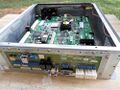
Sockets, with open lid
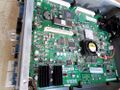
Inside, internal ROM board removed
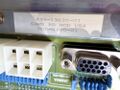
Model number
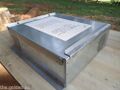
Outer case, back
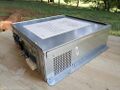
Outer case, right
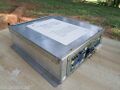
Outer case, left
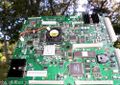
Motherboard, top
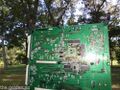
Motherboard, bottom
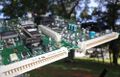
Motherboard, side
_US_Photo1.JPG)
_US_Photo2.JPG)
_US_Photo3.JPG)
_US_Photo4.JPG)
_US_Photo5.JPG)
_US_Photo6.JPG)
_US_Photo7.JPG)
_US_Photo8.JPG)
_US_Photo9.JPG)
Main version
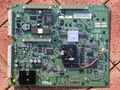
Top of the motherboard
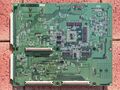
Bottom of the motherboard
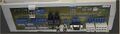
Sockets
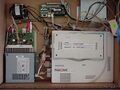
Full System
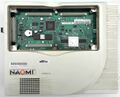
NAOMI Case
GD-ROM slot
DIMM Module + Key


Notes
- ↑ [125 MHz,[3][4] compared to the Dreamcast's 100 MHz 125 MHz,[3][4] compared to the Dreamcast's 100 MHz]
- ↑ [2 instructions per cycle 2 instructions per cycle]
- ↑ [7 floating-point operations per cycle 7 floating-point operations per cycle]
- ↑ [Scaled for high-end arcade technology,[15] with parallel ISP cores and increased PE processing elements within processor.[16] NAOMI has average fillrate of 1 gigapixel/sec,[5] twice that of the Dreamcast's average 500 megapixels/sec fillrate.[17] Scaled for high-end arcade technology,[15] with parallel ISP cores and increased PE processing elements within processor.[16] NAOMI has average fillrate of 1 gigapixel/sec,[5] twice that of the Dreamcast's average 500 megapixels/sec fillrate.[17]]
- ↑ [14 cycles/polygon per ISP FPU, 51 floating-point operations per polygon, 102 floating-point operations per 14 cycles[19][20] 14 cycles/polygon per ISP FPU, 51 floating-point operations per polygon, 102 floating-point operations per 14 cycles[19][20]]
- ↑ [Flat/Gouraud shading, 43 bytes double-buffered Flat/Gouraud shading, 43 bytes double-buffered]
- ↑ [Gouraud shading, 62 bytes double-buffered Gouraud shading, 62 bytes double-buffered]
- ↑ [Textured, Gouraud shading, bump mapping, 72 bytes double-buffered Textured, Gouraud shading, bump mapping, 72 bytes double-buffered]
- ↑ [Textured, Gouraud shading, modifier volumes, 75 bytes double-buffered Textured, Gouraud shading, modifier volumes, 75 bytes double-buffered]
- ↑ [Sprite, quad, 192 bytes double-buffered Sprite, quad, 192 bytes double-buffered]
- ↑ [8×8 texture, 16 colors 8×8 texture, 16 colors]
- ↑ [8×8×4-bit 8×8×4-bit]
- ↑ [1024×1024×24-bit 1024×1024×24-bit]
- ↑ [2048×2048×16-bit 2048×2048×16-bit]
- ↑ [32 pixels/cycle per ISP,[29] 1 pixel per PE (processor element),[16][30] 64 PE (32 PE per ISP), 3.2 gigapixels/sec per ISP[31] 32 pixels/cycle per ISP,[29] 1 pixel per PE (processor element),[16][30] 64 PE (32 PE per ISP), 3.2 gigapixels/sec per ISP[31]] (Wayback Machine: 2000-08-23 20:47)
- ↑ [10 pixels per cycle, 6 PEs (processor elements) per pixel, 500 megapixels/sec per ISP 10 pixels per cycle, 6 PEs (processor elements) per pixel, 500 megapixels/sec per ISP]
- ↑ [60 layers depth, 2 pixels per cycle, 32 PEs per pixel, 100 megapixels/sec per ISP 60 layers depth, 2 pixels per cycle, 32 PEs per pixel, 100 megapixels/sec per ISP]
- ↑ [Same as pixel rendering fillrate Same as pixel rendering fillrate]
- ↑ [14 cycles per 3 vertices, per ISP FPU 14 cycles per 3 vertices, per ISP FPU]
- ↑ [14 cycles/polygon per ISP FPU, 200,000–317,000 polygons per scene, 100–400 pixels per polygon 14 cycles/polygon per ISP FPU, 200,000–317,000 polygons per scene, 100–400 pixels per polygon]
- ↑ [Bump mapping, 200,000–260,000 polygons per scene, 100–500 texels per polygon Bump mapping, 200,000–260,000 polygons per scene, 100–500 texels per polygon]
- ↑ [Bump mapping, 100,000–219,000 polygons per scene, 100–600 texels per polygon Bump mapping, 100,000–219,000 polygons per scene, 100–600 texels per polygon]
- ↑ [138,888 polygons per scene, 100–700 texels per polygon 138,888 polygons per scene, 100–700 texels per polygon]
- ↑ [137,664 polygons per scene,[32] 100–700 texels per polygon 137,664 polygons per scene,[32] 100–700 texels per polygon]
- ↑ [103,000–137,000 polygons per scene, 32 texels per polygon 103,000–137,000 polygons per scene, 32 texels per polygon]
- ↑ [122,958 bytes 122,958 bytes]
- ↑ [26,178 bytes: 8 KB instruction cache, 16 KB data cache, 64 bytes store queue cache, 1538 bytes registers 26,178 bytes: 8 KB instruction cache, 16 KB data cache, 64 bytes store queue cache, 1538 bytes registers]
- ↑ [47,104 bytes: 8.25 KB register memory, 24.5 KB ISP cache, 13 KB TSP cache, 256 bytes FIFO buffer 47,104 bytes: 8.25 KB register memory, 24.5 KB ISP cache, 13 KB TSP cache, 256 bytes FIFO buffer]
- ↑ [32,780 bytes: 32 KB sound registers, 8 bytes RTC registers, 4 bytes FIFO buffer 32,780 bytes: 32 KB sound registers, 8 bytes RTC registers, 4 bytes FIFO buffer]
- ↑ [16,896 bytes: 512 bytes RAM, 16 KB ROM[9] 16,896 bytes: 512 bytes RAM, 16 KB ROM[9]]
- ↑ [128‑bit, 200 MHz 128‑bit, 200 MHz]
- ↑ [2304‑bit, 100 MHz: 32-bit TA tile buffer,[35] 2x 32-bit ISP registers, 32-bit TSP registers,[36] 2x 1024-bit ISP PE Arrays,[16] 64-bit TSP Texture Cache,[29] 32-bit TSP Tile Accumulation Buffer, 32-bit Secondary Accumulation Buffer 2304‑bit, 100 MHz: 32-bit TA tile buffer,[35] 2x 32-bit ISP registers, 32-bit TSP registers,[36] 2x 1024-bit ISP PE Arrays,[16] 64-bit TSP Texture Cache,[29] 32-bit TSP Tile Accumulation Buffer, 32-bit Secondary Accumulation Buffer] (archive.today)
- ↑ [32‑bit, 67 MHz 32‑bit, 67 MHz]
- ↑ [64‑bit, 100 MHz, Hitachi HM5264165FTT‑A60[37] 64‑bit, 100 MHz, Hitachi HM5264165FTT‑A60[37]]
- ↑ [64‑bit, 125 MHz, Hynix HY57V161610DTC‑8[4] 64‑bit, 125 MHz, Hynix HY57V161610DTC‑8[4]]
- ↑ [16‑bit, 66 MHz,[22] Samsung KM416S4030[38] 16‑bit, 66 MHz,[22] Samsung KM416S4030[38]]
- ↑ [16‑bit, 22 MHz, Hitachi HM62256[39] 16‑bit, 22 MHz, Hitachi HM62256[39]]
- ↑ [16‑bit, 10 MHz[22] 16‑bit, 10 MHz[22]]
- ↑ [16‑bit, 2 MHz[40] 16‑bit, 2 MHz[40]]
- ↑ [2× 64‑bit connectors, 1× 16‑bit connector 2× 64‑bit connectors, 1× 16‑bit connector]
- ↑ [34 MHz 34 MHz]
- ↑ [50 MHz[41] 50 MHz[41]]
- ↑ [66.666667 MHz[42][43] 66.666667 MHz[42][43]]
- ↑ [8/16‑bit, 28–50 MHz 8/16‑bit, 28–50 MHz]
- ↑ [1/2× 64‑bit, 133 MHz[44][45] 1/2× 64‑bit, 133 MHz[44][45]]
- ↑ 46.0 46.1 46.2 [128/256‑bit 128/256‑bit]
- ↑ 47.0 47.1 47.2 47.3 [32/64‑bit 32/64‑bit]
- ↑ [64/128‑bit 64/128‑bit]
References
- ↑ 1.0 1.1 http://www.sega.co.jp/sega/corp/news/nr000921_2.html (Wayback Machine: 2000-10-17 17:46)
- ↑ http://segatech.com/arcade/naomi1/index.html (archive.today)
- ↑ 3.0 3.1 3.2 3.3 3.4 Sega NAOMI (MAME)
- ↑ 4.0 4.1 File:HY57V161610D datasheet.pdf
- ↑ 5.0 5.1 5.2 Press release: 1998-09-17: SEGA SELECTS POWERVR SERIES2 AS 3D GRAPHICS TECHNOLOGY FOR NEW ARCADE SYSTEM
- ↑ 6.0 6.1 File:NAOMI 1998 Press Release JP.pdf
- ↑ File:SH-4 Software Manual.pdf
- ↑ Obsolete Microprocessors
- ↑ 9.0 9.1 File:TMP90PH44 datasheet.pdf
- ↑ 10.0 10.1 File:PIC12C508A datasheet.pdf
- ↑ 11.0 11.1 File:PIC16C621A datasheet.pdf
- ↑ File:EPF8452A datasheet.pdf
- ↑ File:EPC1064 datasheet.pdf
- ↑ 14.0 14.1 Sega NAOMI (Historic MAME)
- ↑ File:PowerVR.pdf, page 2
- ↑ 16.0 16.1 16.2 16.3 File:PowerVR.pdf, page 3
- ↑ Edge, "January 1999" (UK; 1998-12-23), page 11
- ↑ File:DreamcastDevBoxSystemArchitecture.pdf, page 110
- ↑ 19.0 19.1 File:DreamcastDevBoxSystemArchitecture.pdf, page 95
- ↑ File:DreamcastDevBoxSystemArchitecture.pdf, page 203
- ↑ File:BU142 datasheet.pdf
- ↑ 22.0 22.1 22.2 22.3 File:DreamcastDevBoxSystemArchitecture.pdf
- ↑ File:DreamcastDevBoxSystemArchitecture.pdf, page 102
- ↑ File:DreamcastDevBoxSystemArchitecture.pdf, page 152
- ↑ File:DreamcastDevBoxSystemArchitecture.pdf, page 199
- ↑ File:PowerVR2DCFeaturesUnderWindowsCE.pdf, page 9
- ↑ File:DreamcastDevBoxSystemArchitecture.pdf, page 144
- ↑ 28.0 28.1 Hideki Sato Sega Interview (Edge)
- ↑ 29.0 29.1 File:DreamcastDevBoxSystemArchitecture.pdf, page 96
- ↑ File:Patent US20030025695.pdf
- ↑ http://computer.org/micro/articles/dreamcast_2.htm (Wayback Machine: 2000-08-23 20:47)
- ↑ Homebrew Test
- ↑ Asian Dynamite (MAME)
- ↑ File:XCF01S datasheet.pdf
- ↑ File:DreamcastDevBoxSystemArchitecture.pdf, page 165
- ↑ http://mc.pp.se/dc/pvr.html (archive.today)
- ↑ File:HM5264 datasheet.pdf
- ↑ File:KM416S4030C datasheet.pdf
- ↑ File:HM62256B datasheet.pdf
- ↑ File:AT93C46 datasheet.pdf
- ↑ File:S29GL-N datasheet.pdf
- ↑ Sega NAOMI (ROM Dumping)
- ↑ File:DA28F640J5 datasheet.pdf
- ↑ 44.0 44.1 Sega NAOMI DIMM board and GD-ROM
- ↑ File:M366S3323CT0 datasheet.pdf
- ↑ File:SegaProductsTerminationAnnouncement 2016-11 JP.pdf
- ↑ File:SegaProductsTerminationAnnouncement 2016-12.pdf
- ↑ https://www.4gamer.net/games/999/G999905/20210126043/ (Wayback Machine: 2021-02-05 15:00)

| Sega arcade boards |
|---|
| Originating in arcades |
|
77
78
79
80
81
82
83
84
85
86
87
88
89
90
91
92
93
94
95
96
97
98
99
|
| Console-based hardware |
|
84
85
86
87
88
89
90
91
92
93
94
95
96
97
98
99
00
01
02
03
04
05
06
07
08
09
10
11
12
13
14
|
| PC-based hardware |
|
05
06
07
08
09
10
11
12
13
14
15
16
17
18
19
20
21
22
23
|